How to Choose Your Darts: The Complete Guide
Having your own darts is the most important step to gaining consistency. This guide will break down the essential criteria to help you find the darts that will become a natural extension of your arm.
Steel Tip or Soft Tip?
This is the first question to ask yourself, and the answer depends solely on where you play.
Steel Tip
For traditional sisal boards (the "bristle" boards of classic bars and televised competitions). They are heavier.
Soft Tip
For electronic boards that count points automatically. They are generally lighter (often limited to 20g maximum).
Barrel Material: Brass vs Tungsten
The "barrel" is the body of the dart, the metal part you hold. It's the heart of your equipment.
Brass: For Beginners
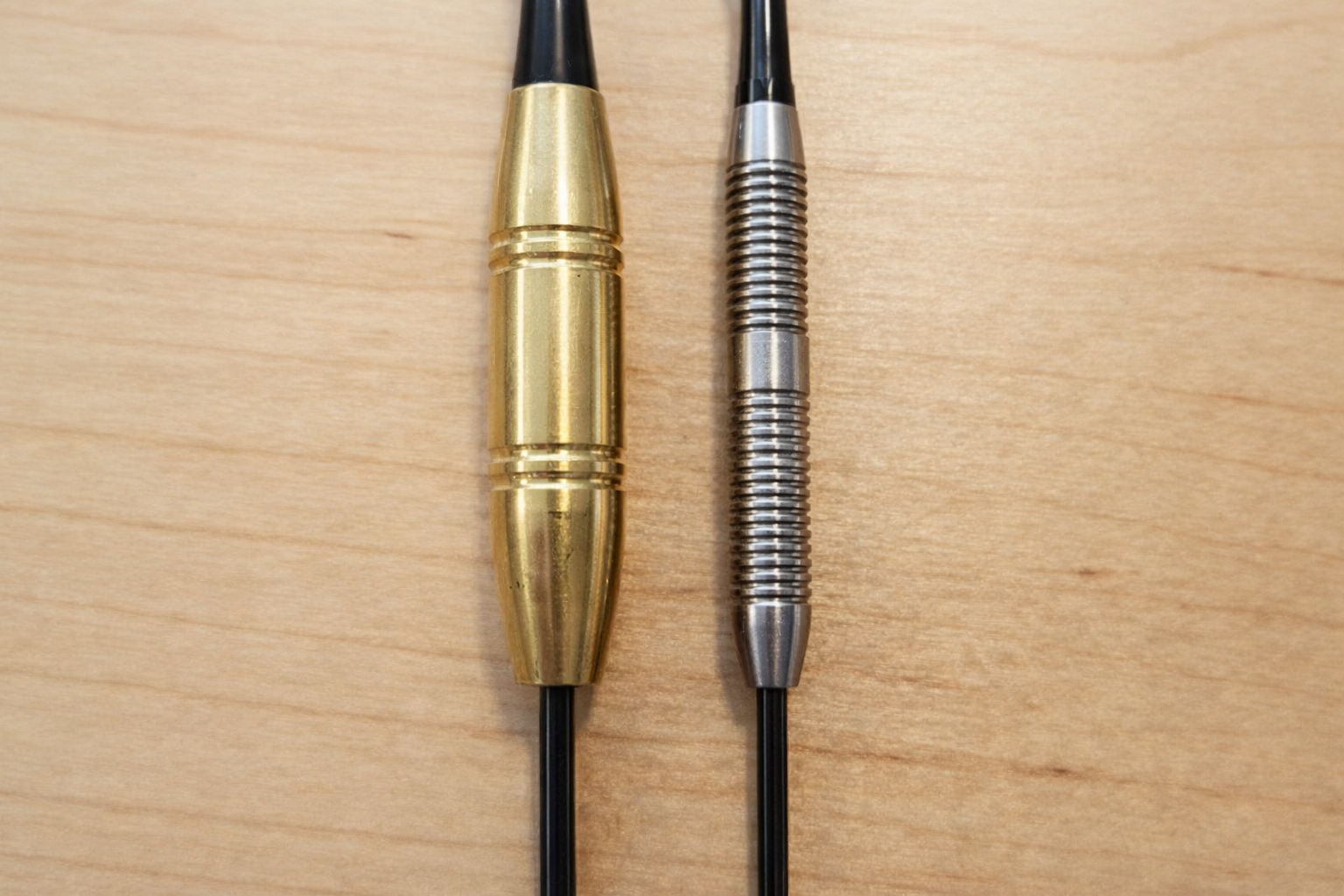
This is the material for entry-level darts. Advantage: very inexpensive. Major disadvantage: to achieve a correct weight, the dart must be very thick and bulky, making groupings difficult.
Tungsten: The Serious Player's Choice
This is the standard once you want to improve. Tungsten is a very dense metal that allows for thin darts while maintaining a high weight. An 80% or 90% tungsten model is an excellent lasting investment.
Tip : An 80% or 90% tungsten set is a lasting investment that will accompany you throughout your progression.
Weight: Finding Your Balance
Weight influences your throw trajectory. There is no "best" weight, it's a matter of personal feel. The heavier a dart, the more stable and arched its trajectory. The lighter it is, the more direct and powerful the throw must be.
| Tip Type | Recommended weight for beginners |
|---|---|
| Steel Tip | 22g - 24g |
| Soft Tip | 16g - 18g |
If your darts tend to "float" and land too high, try a bit heavier. If you're forcing too much and they land too low, try lighter.
Barrel Shape and Grip
This is the most subjective part. How do you hold your dart? At the front near the tip? In the middle? At the back?
The Shape
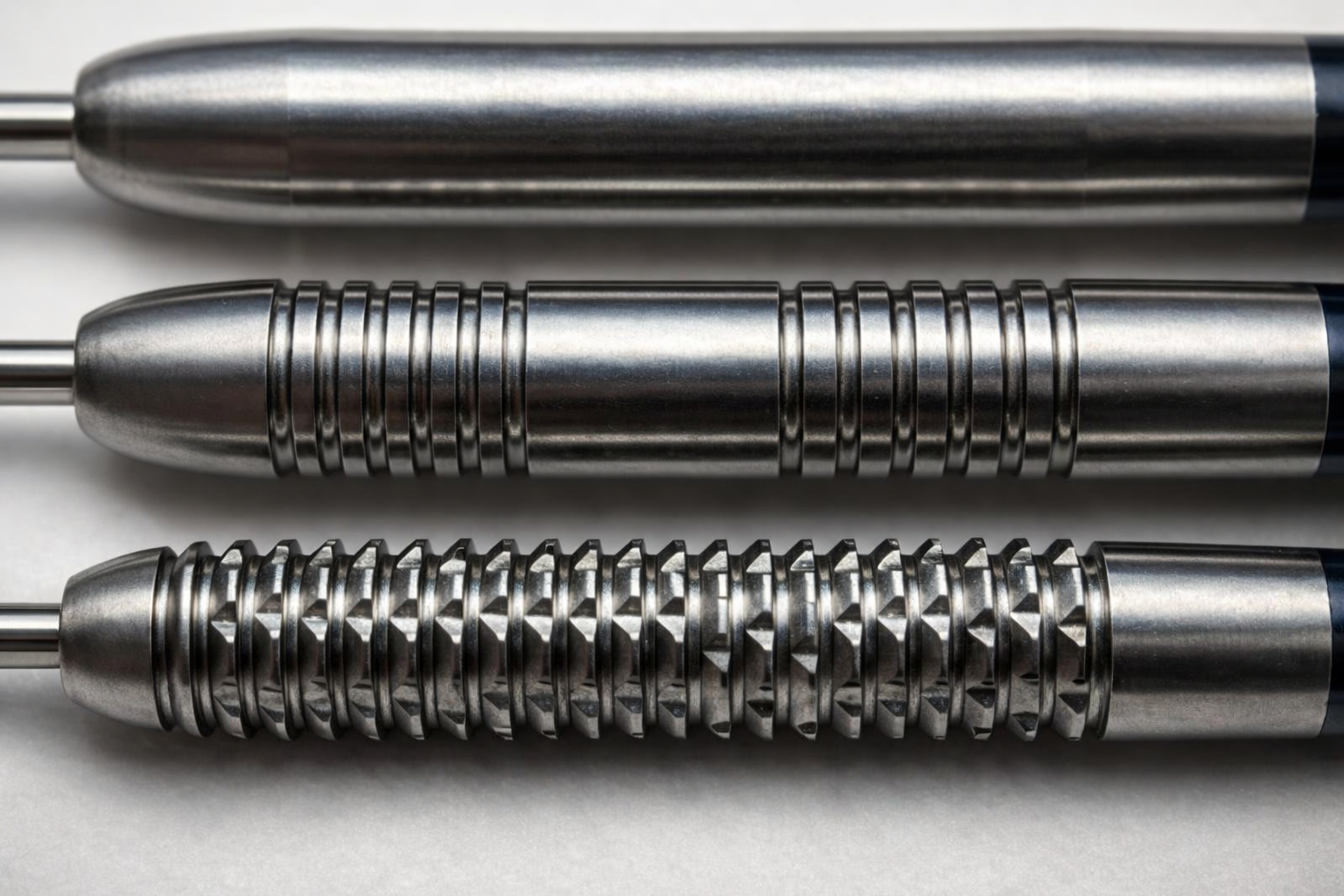
- Straight Barrel : The timeless classic, balanced in the center and suits most grips.
- Torpedo : Wider at the front and thin at the back. Weight is concentrated towards the front, ideal if you hold the dart near the tip.
The Grip (Texture)
- Smooth : Very little grip, for those with a very light hold.
- Ringed : Classic rings that offer a standard and recognizable grip.
- Razor or Shark Grip : Very aggressive cuts that "bite" the fingers. Ideal if you need maximum grip.
Shafts and Flights: Fine Tuning
Shafts
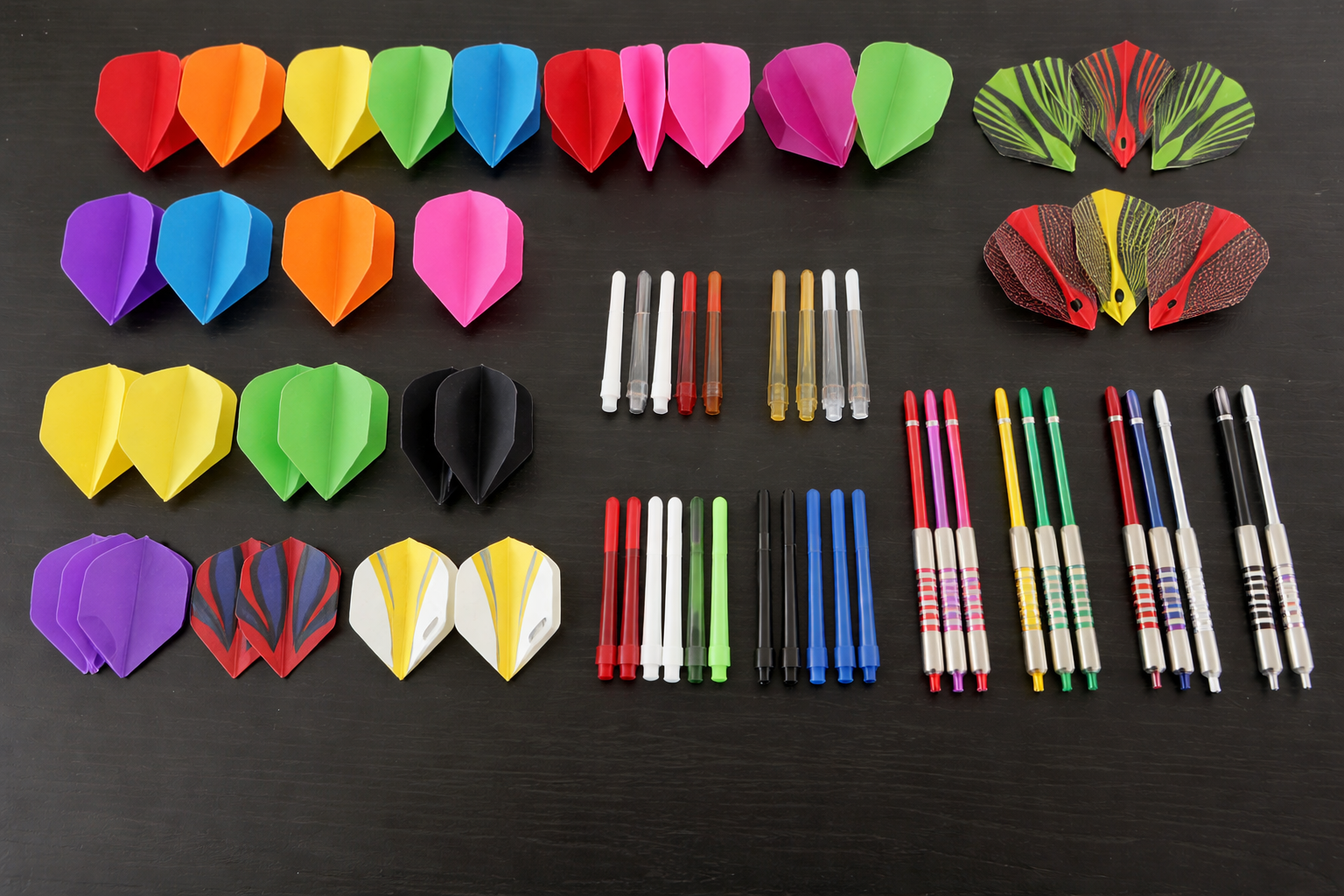
They come in different lengths (Short, Medium, Long) and materials (Nylon, Aluminum). Length modifies the center of gravity. Start with Medium nylon shafts (cheap and durable).
Flights
They stabilize the dart in flight. The Standard shape (largest) offers the most lift and stability. It's the best choice for beginners, as it forgives more throwing errors.
Conclusion: The Importance of Testing
There is no magic dart. The best dart is the one you're comfortable with.
For your first "serious" purchase (Steel Tip), a Tungsten set (80% or 90%), straight shape, weighing between 22g and 24g, equipped with medium shafts and standard flights, is the safest choice.
Also read: